Showing posts with label film. Show all posts

Friday, September 11, 2009

Against Irony: The Many Virtues of Jane Campion's Bright Star


In Jane Campion's Bright Star, the viewer experiences breath and air as markers of the passage of time in the lives of John Keats and Fanny Brawne, star-crossed lovers destined to leave more to history than to their own happiness. The film, shot entirely in natural and candle-light, is punctuated by two long stretches of period choral music sung a capella. Long close-ups on women's hands doing domestic work - sewing, cooking, and packing - return again and again. Several shots feature one of the lovers lying on their back dreamily or looking with apprehension towards an open window. Like a painting by Hammershøi or Hopper, these images suspend the viewer, drawing out the moment into a filmic statement about the fleeting nature of human existence.


That's Hammershøi's Interior With Young Woman from Behind and Hopper's Morning Sun, in order, above.

Like my other favorite films of recent memory - Silent Light and Jeanne Dielman (which I reviewed together here) - Bright Star dignifies the period women's work that a more glamorous film would sweep aside. Fanny Brawne, played in the film by the excellent Abbie Cornish, is constantly seen with needle and thread, creating the colorful outfits that bloom on her like another variety of the Hampstead flowers she and Keats spend afternoons collecting. Fanny is one of the better heroines of recent memory, a stubborn, exuberant, youthful and ultimately authentic lover. She is both more outspoken than we expect of a woman of her period and more believable. The kisses Fanny and Keats share are chaster than any I've seen onscreen, and more passionate for it. The film's subversion of the audience's expectations of a period film make it, like Sally Potter's Orlando, a more authentic experience.

It's a testament to Campion's script that Fanny's story comes to eclipse Keats himself; the film dignifies her longer life and less glamorous fate. Keats's Wikipedia entry refers to her as "rather promiscuous," which says a lot about the enduring legacy of misogyny embodied in the film by the poet Charles Armitage Brown, who believes that Fanny and Keats's relationship will ultimately destroy him. We all know how this story ends - Keats died of tuberculosis in 1821, at age 25 - and so the story leaves it to us to answer the question of whether passion killed the poet or inspired the work he left behind.

This film boasts many pleasures: the remarkable performance of Edie Martin as Toots Brawne, Fanny's younger sister; the transporting images of the Hampstead countryside; the intelligent and moving discussions of poetry; and the phenomenal lighting. I'll level with you. I was in tears the whole time. This is the best film of 2009, hands down. I love Bright Star especially because of its refusal to bow to the vast hunger for cynicism, a stylistic tendency in all modern art that has become lazy and predictable. With none of the tired shiny tricks like those on display in Tarantino's unfocused and bloated Inglourious Basterds,, this film captures the exhausting length of life with elegance and wit.

Tuesday, September 8, 2009

The Racial Politics of District 9


Warning: Definite spoilers ahead.

As I watched Winkus Van De Merwe, the titular anti-hero of Neil Blomkamp's feature District 9, grow a conscience along with his new "Prawn" body parts, I couldn't help wondering how the film would have been received if the Other in the film had been brown people instead of large insectile aliens. Winkus's character arc is familiar from well-intentioned old-fashioned narratives where the interloping white man infiltrates an othered culture, either of purpose or by accident, comes to understand the gentle natives and eventually turns tail on his own kind to help them escape their oppressors. It's an old story, the White Man's Burden, one where only the outsider can appropriately organize the pure-hearted but disorganized othered mass and lead them to freedom.

I don't think a full indictment of Blomkamp's movie is in order - it's a fresh take on the science fiction epic, and compellingly explores several themes that are ripe for inclusion in pop culture discourse, foremost among them the issue of displaced and refugee communities. Still, setting the film in Johannesburg and involving another refugee population - that of the Nigerians who also live in the slums and scam the alien population - gave Blomkamp the opportunity to make a more considered inquiry into the issues of race and culture present in his fictional situation. I can't say I was too impressed with the garden-variety witchdoctor-employing African warlord Obesandjo, who had the capacity to be expanded into a pivotal player but remained a stereotype of a ca-razy African primitive. Also of interest / frustrating: the fact that military contractors have joined the ranks of Nazis and, well, giant insectile aliens in that rarified class of villains who can be killed with impunity. And I have to agree with Rich at Fourfour's complaint about the film's inexplicable switch from straightforward fake-documentary to first-person narrative film.

Still, I enjoyed District 9 and found myself moved by most of its emotional tricks: the kind and humane alien, Christopher Johnson, and his paternal relationship with his son, as well as Winkus's enduring love for his wife Tanya. It's also one of the most uncannily unsettling movies I've seen in a long time, making the most of its odd marriage of faux-documentary style to the constant threat of Cronenberg-level body violence. The film's greatest strength is Winkus himself, a weird Michael Scott of alien management who we manage to root both for and against. I will be interested to see the sequel, currently known as District 10, and see how much further Blomkamp can take his allegory.

Saturday, April 18, 2009

Like light


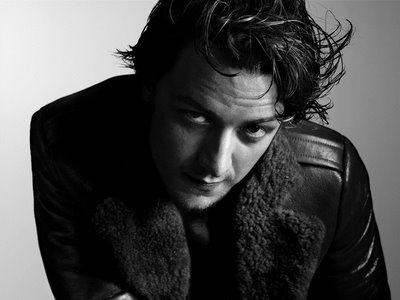
Do you know how many photographs of James McAvoy I have on my computer?


So many.


When, as a senior in high school, I developed a terrible crush on Adrien Brody, I tortured myself with the knowledge that it was completely inappropriate because I was so old. Even as I bought an autographed photo of Brody on eBay and cut pictures of him out of magazines, tried to follow his supremely boring lovelife on the internet and traveled alone to a movie theater about forty-five minutes away from my house on the El to watch the middling pre-Brody-Oscar streetlife movie Love The Hard Way, I felt guilty. I was eighteen! I was way too old to, you know, discover that Brody's mother was acclaimed photog Sylvia Plachy, buy a bunch of her hardcover collections on Amazon, and try and cultivate a correspondence with Plachy about how much I enjoyed her work so that we would be best friends when I moved to New York for college and I would become her protegee and she would introduce me to her charming, single son...

You see the way my mind works. But I was eighteen. I was still allowed a little bit of that. Being a senior in high school with a crush on a translucent-nosed Oscar-winner was way more okay than being a first-year master's candidate BitTorrenting British TV like State of Play and Shameless just so I could take screenshots like this one:


It's fitting that I have yet to see The Last King of Scotland, one of McAvoy's more famous efforts, but I have sat through all of the Children of Dune miniseries (what an intersection, my favorite pale Scot playing my favorite post-human Messiah's son!) and the aforementioned "middling James McAvoy vehicle" Starter For 10. Oh man, I should definitely see Rory O'Shea Was Here, the fun-quadripalegic movie whose more restrained UK title was Inside I'm Dancing. That looks right up my alley.

Also, I saw Wanted in a movie theatre in the Czech Republic. Twice.

Why the outpouring of sudden McAvoy love, aside from my inescapable preoccupation with this scene from Atonement?


(Not original, I know. But understandable.)


The Guardian has a Proust Questionnaire-like Q&A with McAvoy up on their website, and honestly, the whole thing is just a bit much for me to bear. I just got out of this crush, McAvoy. Don't drag me back in.

My favorite of his responses:

When were you happiest?
When I was 15 or 16 - I slept really well then. Now I sleep on a bed of anxiety-tipped nails.

What is your most treasured possession?
My lightsaber - it's well cool.

What do you most dislike about your appearance?
Freckles.

What would be your fancy dress costume of choice?
Boomer or Athena from Battlestar Galactica.

If you could go back in time, where would you go?
To when dragons roamed the Earth.

What does love feel like?
Like light.


Be still, my heart.

Friday, February 6, 2009

Two Movies

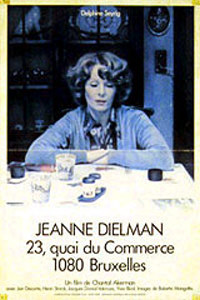
Last week, after what I think was exactly a calendar year of not going to the Film Forum for no other reason than sheer laziness (well, also not living in NYC for five months of 2008), I saw two films at the Film Forum. They were Silent Light, directed by Carlos Reygadas, and Jeanne Dielman, 23 Quai du Commerce, 1080 Bruxelles, directed by Chantal Akerman. It was my first time seeing both movies.


The premise of Silent Light (Stellet Licht in Plattdeutsch, the language spoken by Russian Mennonites) - a man falls in love with a woman who is not his wife - interested me less than the details of its production. Silent Light was filmed with a nonprofessional cast of Mennonite actors. Although it takes place in the Mennonite community in north Mexico (a community I did not know existed), the actors also hail from Canada and Germany, and were able to communicate with eachother because they all speak the same small language. Miriam Toews, one of the lead actors, is an acclaimed Canadian author who was raised in a Mennonite community. All of this is the type of trivia that makes me adore movies.

And I did enjoy Silent Light deeply, although my prurient interest in the film as a window into the cloistered lives of Mexican Mennonites ended up being inconsequential. The movie is an explosion of sensuality. Watching Silent Light reminded me of an African cinema course I took during my undergraduate career. The instructor told us that we would have to learn to read film in a new way, since African cinema features few of the tropes of mainstream American movies (closeups, quick cuts, flashy camerawork) and often features long still shots on people moving through a landscape. But Reygadas's film is by no means plain. every scene was so full of texture that I felt physically respondent to the film, wet when it was raining, heavy with sorrow during scenes of a funeral - but it subverts the expectations of the modern viewer. The film begins and ends with long dreamlike shots of a sunrise and sunset. The images are strikingly beautiful, and yet the desire to look away, to do something other than focus on what was in front of me, was hard to resist. Most of the people in the theatre did not resist - the rows were lit up with cell-phone screens as people texted and checked their missed calls. But Silent Light is all about the value of experience, even at the cost of personal comfort. A life fully lived, it seems to say, will never run out of surprises.


Jeanne Dielman is completely tonally different from Silent Light, but it too has a deep love for the unmoving camera. For nearly three and a half hours the viewer follows Jeanne through her day. She is a Belgian housewife without a husband, performing the rituals of domesticity seemingly solely for the benefit of her teenage son, who is at school all day. Even with the promise of "something" happening at the end of the movie, Jeanne Dielman is a long haul. Scenes ten and fifteen minutes long show Jeanne meticulously preparing food and then cleaning up after herself with a heartbreaking efficiency. The viewer returns with Jeanne to her chores - folding up the sofa bed her son sleeps on, making her own bed, grinding coffee beans - so many times that one starts to feel the same sense of exhaustion and misery at the routine that Jeanne herself must feel.


One of Jeanne's daily tasks is draping a small towel over her shiny middle-class bedspread, so that the gentleman caller she receives in the middle of each day will not sully her linens. Jeanne Dielman is a genteel prostitute, you see, selling dispassionate rolls in the sack in exchange for her continued stasis. These encounters are barely shown in the movie. Instead, we see Jeanne's ability to cope deteriorate over the course of the three days. On the second day, her hair is still tousled when her son gets home. "Your hair's a mess," he says, scarfing down his food. Jeanne's sister writes to her from Canada: would you like to visit us and maybe meet a nice man? But Jeanne can't even summon the energy to decide whether or not she would like to make the trip.

Where Silent Light was life-affirming for me, Jeanne Dielman felt uncomfortably familiar. I, too, am a woman who spends a lot of time alone in her apartment, although I am not also a discreet prostitute. I know the feeling of preparing a meal for yourself and then carefully cleaning up all evidence that the meal even occurred. The slight satisfaction that I take from small household tasks can become an enormous gloominess over the course of a day spent alone. By nightfall I'm restless, and if there's nothing for me to do and no one to see, the clean kitchen is small comfort.

Chantal Akerman was 25 when she made Jeanne Dielman. In an interview with my friend Dennis Lim, Akerman said:
“Jeanne has to organize her life, to not have any space, any time, so she won’t be depressed or anxious. She didn’t want to have one free hour because she didn’t know how to fill that hour. [...] I sometimes think I should have made it after many other films, at the end of my career,” she said. “I remember saying to myself, how can I make a better film? But it was also exactly the film I had to make then. It says something about a woman, about a way of living a life, about life after the war. It was the first thing I had to pour out of myself.”

She added, “I would have changed nothing about it.”

Sunday, January 11, 2009

Ruminations on the Golden Globes

I have always had only the most passing interest in the Golden Globes. In keeping with that lack of enthusiasm, here is an incomplete, vaguely stream-of-consciousness liveblog of tonight's show.

7:47 pm: They just showed Marisa Tomei. I feel like every time I've heard her name mentioned in the past five years has been in reference to how surprisingly good she looks naked. In 2005, someone mentioned this in relation to her role in Factotum. But by far the most constant comment about Tomei is that she "looks amazing" in Before The Devil Knows You're Dead. Seriously, upwards of sixteen men have mentioned this to me. Good for Tomei. I bet this skill comes in handy in her current role as a stripper in The Wrestler (Full disclosure: I have not seen any of the films mentioned above).

7:57 pm: "Please welcome the star of the upcoming films Bunraku and Happy Tears, Demi Moore!" Best sentence ever? Also, I misheard "Bunraku" as "Spunkaroo."

8:01 pm: My mom just said "There's Shirley MacLaine! She's still alive!"

8:09 pm: This announcer has not been given a lot to work with: "Here are two stars of The Dark Knight, Maggie Gyllenhaal and Aaron Eckhart!" Here they are, folks! Two of 'em!

8:12 pm: Laura Linney has the most beautiful skin. What does she do? Bathe in the blood of virgins, Erzsebet Batory-style?

8:22 pm: Alec Baldwin looked adorably nervous when they announced his nomination. Also, what did David Duchovny mouth to the camera? He told me what he was going to say this morning before he left my apartment, but I forgot.

8:30 pm: Renee Zellweger's dress is hideous! This makes me happy! Also, they just cut very briefly to an incredibly creepy shot of Marc Anthony stroking Jennifer Lopez's arm.

8:44 pm: Hi, Kate Beckinsale! You and Diddy are a hilariously wooden duo. Remember when you had a career and made good movies? I don't!

Sometime later - didn't record the time: David Duchovny was so sad in front of the mike with Jane Krakowski, I can't even make a good joke about his sex addiction and how it has impacted me in a positive way.

9:18 pm: Sandra Bullock making a tired joke about the relative sexiness of the Vicky Cristina Barcelona setup is my idea of the entertainment in hell.

9:29 pm: Do the people in attendance really care enough about Madonna and Guy Ritchie's divorce to look mildly scandalized at Sasha Baron Cohen's mild joke?

9:38 pm: As Kate Winslet wins her second Globe of the evening, my committment to this project waffles. Amelie Gilette is way better at this than me: "9:20pm--Slumdog Millionaire, the only movie that could make Who Wants To Be A Millionaire even remotely entertaining, wins for best screenplay. Brad Pitt clearly mouthed, "What's this for?" as the writer went up on stage. If it's not a magical 80-year-old in love with an 11-year-old , it doesn't matter does it, Brad?"

9:43 pm: "Hello, we're TV actors." Pretty good, Rainn Wilson.

Tuesday, December 9, 2008

This blog is only about vampires and personal ads

Most vampire stories are love stories, and any good love story has an element of impossibility. Vampire love is either the most or the least impossible, depending on how you look at it. The solution to falling in love with a vamp seems obvious. Undead bites living, and the two are together forever. But it's never that easy.

One would think that vampires would avoid all the attendant trouble of falling for their food, and stick instead to their own kind, as they are often hissingly encouraged to do in by old flames. Yet nearly every story of bloodsucking passion includes the weak logic that vampires, left alone with each other for eternity, are largely sick of each other. The exception is the evil pod of vampires that stalks through every story with a sympathetic vamp - an odd number, maybe five or three, often featuring only one woman, with the dark implication of an even more perverse sexuality, as if part of the dark arts are endless "Heavy Duty dicks for One Lucky Chick".


One of the marks of a "good" vampire is inexorable attraction to - and fated love for - a specific human. Dracula had Mina, and now in the film adaptation of Stephanie Meyer's incredibly successful Twilight series, Edward Cullen has Bella Swan. I've never read the Meyer books, but that's mostly because the first one was published long after my departure from the YA aisle at the bookstore. If I was eleven, I'd be all over this shit. The last few weeks have seen a hemorrhage of vampire media. I've seen both Twilight and Let The Right One In, a far superior Swedish film with a similar topic. I also finished the season of True Blood, a bit behind the rest of the American public.

In all of these stories, a vampire's mettle is tested by their desire for their human love, bloodlust and regular-lust conflated by proximity. True Blood's Bill Compton thinks he can control himself, and generally does, but neither Edward Cullen nor Eli, Let The Right One In's preteen vamp and the only girl of the trio, has such faith in the strength of their wills. Ultimately each of these narratives are about the concept of self-control, a neat trick especially for Twilight's convenient abstinence corollary. Of the three, Let The Right One In succeeds most fully, becoming the story of a friendship just a bit stranger than usual without resorting to the romance-novel histrionics of Twilight or self-satisfied TV tropes of True Blood.

What was the first vampire movie I ever saw? My father was a fan of Dark Shadows, so we followed the 1991 remake. I also have a hazy memory of a night spent watching one of the Christopher Lee Dracula films when I was around seven years old, sitting on my parents' bed with my mother asleep beside me. I fell into a weird combination of unwitting lucid dreaming and sleep paralysis, quaking for what seemed like hours under the belief that Lee was coming in the window.

My maternal grandmother died suddenly on Halloween, 1998. She lived alone in New York City, so my family did not receive this news until the following Monday. A week passed in which my parents disappeared to settle her affairs and returned as pale, drawn versions of themselves. The next weekend we held a memorial service for her in our local church. I was mourning my grandmother, but I was also bored with the endless arrangements, and I missed my mom. When, the day before the service, she suggested we go downtown together, I leapt at the chance. I was in eighth grade.

We ate lunch at Foodlife, a restaurant in the Water Tower Place mall with a concept that seemed new then - a series of different stations with little kitchens individually preparing cuisines from many lands. For the first time I had a dish that would become one of my favorites, cold thick white noodles smothered in sweet peanut sauce and topped with cucumbers and scallions. Afterwards, she asked if I'd like to see a movie. I did. We went upstairs to the movie theatre to find that the only thing showing was John Carpenter's Vampires. "Let's see it," my mom said, surprising me.

The movie was no masterpiece, but I loved it. At the time, I found Thomas Ian Griffith's Jan Valek terribly appealing, although his allure, just like that of Johnny Rzeznik, has decreased considerably since 1998. I kind of had a thing for James Woods, too, who with this film taught me the word "polesmoker." And there was something undeniably hot about Laura Palmer receiving cunnilingus-reminiscent vampire bites.

My mom had shown me another vampire movie a few years earlier, Tony Scott's The Hunger. As I've mentioned earlier in this space, my parents were never incredibly censorious about what I watched, a trait I have long appreciated.The Hunger was a little exotic for my ten-year-old blood, however. My mother dozed off as we watched, and then woke up to find me staring at the Catherine Deneuve-Susan Sarandon sex scene that made the movie famous. "Maybe this isn't a good idea," she said, switching it off.

Four years later she sat beside me in the darkened theatre, having put the great weight of her grief aside to take me out for a night on the town. On the screen in front of us, heads were torn from bodies and stakes driven into hearts. But the movie was still a vampire story, so it required a love story. At the end, as Daniel Baldwin leaned over and kissed the soon-to-be-vamp Sheryl Lee, my mom reached for my hand and squeezed it in the dark.

Saturday, November 29, 2008

That Time I Felt This Thing


What was my first act of fandom? Anecdotal evidence says that it was singing along with Madonna's "Papa Don't Preach" video, an act of which film footage exists. But I think I was simply imitating my parents' Madonna fandom, not making a statement about my own. I was four, after all, and I liked the way my parents smiled at my hesitant lip-syncing as much as I liked the song itself. "Papa Don't Preach" always seemed sad to me, anyway, especially the shot of Madonna cowering on her bed with her stuffed animals.

No, it's more likely that my first statement of pop culture adoration - my first step towards being the person who wrote in an early draft of a Statement of Purpose for Ph.D. applications that "I have a lifelong devotion to and preoccupation with pop culture icons," (a phrase that was excised after my father's incredulous once-over) - took place on the April 1996 day when I came home from seeing the remake of Flipper. I was eleven years old. I've never been much of a journaler, but that day I opened up a new blank book I'd received for Christmas and wrote on the first page: "I saw Flipper today. Now I have a crush on Elijah Wood."

My crush on Wood didn't last long - when I unearthed the diary a few years ago I was surprised to reread those words. It didn't have the legs of the more epic crushes that would come later, starting later that very year when I saw Brassed Off! on the smallest screen at our local movie theater and developed a prurient interest in Ewan McGregor. During that crush, I didn't have any set behaviors to follow. I printed out images of McGregor from the internet until my color cartridges ran dry and read up on his childhood in Crieff, Scotland. "It's a haggis and heather town," I told my mom, as if I knew what that meant.

It wasn't until my next big celebrity crush, the ur-text of my crushes, that I would establish a template of the half-embarrassed, half-enthusiastic maneuvers that I perform sheepishly to this day. In the meanwhile - sixth and seventh grades - I had crush after crush on boys my own age, classmates in school and in the afterschool Catholic classes I attended. I was the type of bookish girl who cements her unpopularity through brief, fierce interests in things like Wicca. I pined after these boys, dreamt of the day they would ask me to get a hot dog or go to the movies. Finally one did, and for a month I had a "boyfriend" with whom I would hold hands but not kiss, even when our friends locked us in the bathroom together for forty-five minutes. I wanted to kiss a boy, I wanted a boyfriend, but when it was all in front of me I couldn't move.

Then, during the summer before eighth grade, I heard the song "To Sheila" from the Smashing Pumpkins' 1998 album Adore, and fell down the rabbit's hole of emotional entanglement with people who could be at best icons and at worst unfulfilling addictions to me. I've never shaken the habit of falling strangely in love with celebrities. It's a big part of why I started this blog; because I stubbornly believe that there's something interesting about the fact that I, a generally educated and intelligent person, fall against my best wishes in a sort of hopeless lust with strangers.

If there's anyone out there, who did you have a crush on? And why do you think you did?

Monday, July 21, 2008

The End and the Beginning

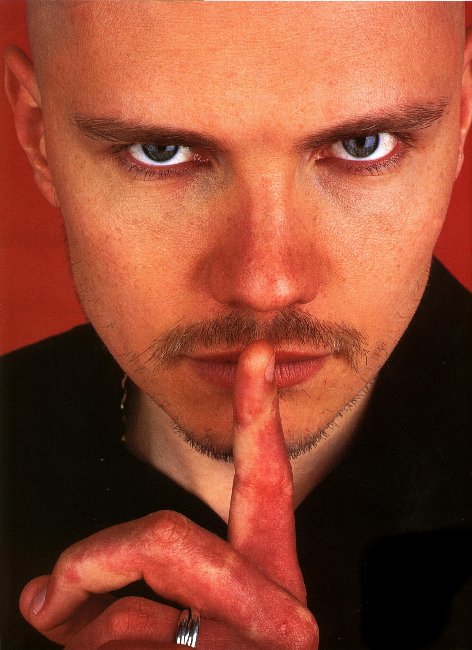
I was a diehard Smashing Pumpkins fan for about a seventh of my life, between the years 1998 and 2001. I got into the band after hearing a complete broadcast of the 1998 album Adore on Q101, "Chicago's Alternative," which I listened to religiously. My father got tickets to see the band perform on July 7, 1998, at what was then known as the New World Music Theater, in Tinley Park, Illinois. I loved the poetic impenetrability of Billy Corgan's lyrics, the soaring guitars, and, well, Billy Corgan: from the first time I saw the "Ava Adore" video on MTV, I was hooked on the bald songsmith's curious combination of vulnerability and theatricality. By the middle of eighth grade, I was madly in love: with his crooked teeth, with the birthmark that covered most of his left arm (as seen in seventh-grade me's favorite picture of him.) I wrote long poems to him in my journal. My greatest wish was to take a picture with Billy.

In my eighth grade yearbook, our answers to two questions were printed under our names beside our pictures: "If I could have one wish it would be..." and "In twenty years I will be..." My answers were "To be the inspiration for WPC's songs and JV's comics" and "Driving in a van with EG, listening to 1979." JV was Jhonen Vasquez, creator of Johnny the Homicidal Maniac, EG was my best friend Erin, and WPC was none other than William Patrick Corgan.

My love for the band waned after I attended their epic five-hour breakup concert; I'd put so much emotional energy into my fandom, waiting outside the XRT building in the November cold and getting my wallet stolen at a Tower Records signing for which I had convinced my parents to let me miss school. I didn't get into Zwan. I liked Corgan's 2005 solo album TheFutureEmbrace but not the way he undercut its release by taking out a giant ad in the Chicago Tribune calling the Pumpkins back together. Of course the reformed Pumpkins were just Billy and stalwart drummer Jimmy Chamberlain. His endless confessional blogging seemed to have destroyed any possibility of pulling James Iha and D'Arcy back into the whirlpool.

I imagine I'll write much more extensively about the Smashing Pumpkins (and Adore, the critically reviled album that remains my favorite) in this space. But the main reason for this entry is the new Watchmen trailer:


That's Billy's reedy voice there, singing "The Beginning is the End is the Beginning," the B-side to "The End is the Beginning is the End," which was written for and featured on the Batman and Robin soundtrack:


I'm sure this was the meta trick of some soundtrack scrub out in Silverlake, but all I hope for is that we get another greenscreen video with Billy in a unitard, gesticulating wildly.

Monday, June 30, 2008

Wanted: Pretty Great


I have a confession to make: I like seeing people get punched in the face. I’ve always kind of wanted to be in a fistfight. In my high school cafeteria I once witnessed a girl break a Snapple bottle in half and lunge with it at her opponent, also female. I don’t think anyone got hurt in that fight, but I saw another one before I graduated where a huge boy had bitten off piece of his tongue. A security guard picked the piece of tongue up off the floor and put it in his pocket.

But these aren’t the fights I fantasize about. I just want to get one good punch in and maybe spray a little blood on the wall. And I guess it would be okay if the same thing happened to me in the process. Perhaps this bloodlust is the reason why I deeply enjoyed Wanted, a movie admittedly plagued by some truly bad writing and unimaginative choices. The whole thing hit me like a roundhouse punch to the face, but in a good way: I felt jolted awake, even as I laughed with incredulity at some of the wooden dialogue.

Wanted suffers from several action movie clichés, including a mindless voiceover that nearly derailed the film for me – it doesn’t help that James McAvoy’s American accent sounds painfully singsongy, like a smart-alecky British kid making fun of the Yanks with lines like “I am the perfect weapon” spoken in a dead-serious drawl. I was aksi put off by Janice, McAvoy’s emasculating boss. Interesting things could have been done with this character – she could have been an attractive woman (maybe Angeline Jolie should have had this role) or a man, but instead the writers were lazy and made her an easy target: an overweight middle-aged woman. Janice is a foregone conclusion as soon as you see her: of course she’s awful, of course she’s an object of ridicule, because she’s fat! And not young! Hilarious use of a generic foreign country is also present; the crowd at the Prague cineplex where I saw the movie tittered when McAvoy and Jolie go to “Moravia,” represented by a Prague tram station.

Despite these not-inconsequential problems, the film moves along at an often-hilarious breakneck pace with infectious enthusiasm. It’s like that one really emotionally stunted friend we all had when we were fifteen who was incredibly good at video games but could barely get a sentence out in conversation. He could be frustrating to hang out with, and you were out of luck if you had a crush on him, but it could be pretty awesome to watch him play video games for a few hours. The Chicago portrayed in the film, while a far cry from the actual neighborhoods I grew up around, has an internal logic and symmetry that is emotionally true to the city, and an especially fine use is made of the El.

Endnote: in their review of the film, the A.V. Club references "McAvoy's Bud Cort-with-sex appeal looks," which further propels my fear that James McAvoy may age a as Bud Cort has.

What does the future hold?

Saturday, September 22, 2007

It's Not The End Of The World Or Anything

Snooping around over at The Dizzies, I found myself entranced by Ed’s ”livebloggery” of Cormac McCarthy’s appearance on Oprah. McCarthy’s latest book, The Road, has received acclaim from sources as diverse as the big O and the Pulitzer Prize committee. It’s also right up my alley, as speculative fiction by masterful artistss is always special treat for me, a dyed-in-the-wool science fiction/fantasy dork. I loved Kazuo Ishiguro’s Never Let Me Go, and leapt at the chance to see Wong Kar-Wai’s 2046. So why haven’t I already filled up a Facebook profile with quotes from The Road, aside from the fairly repugnant quality of that idea?

Because I’m terrified of The Road, and not only because reading an excerpt of it forced me to learn the meaning of the word "catamite".The truth is that I have a very dysfunctional relationship with post-apocalyptic and dystopic fiction. I enjoy it – a lot – but it scares the crap out of me. As a child, I often dreamed of directing horror films, not because I particularly wanted to be a director, but because I thought that if I could see how scary movies were made, they might not frighten me so much (I also said that I wanted to be a nurse so that I could “hurt people,” but that’s a different story). When I was a toddler, my parents were great fans of the Hellraiser series, and often watched the films in our living room after putting me to bed. On these nights, without fail, I crept downstairs to peep out from behind the couch, saw something awful, and refused to sleep for weeks. For whatever reason, stories where the world ends, or has ended, are still a bit much for me. Today, with valid warnings of a real Ragnarok at every turn, I try to keep my mind calm by avoiding any unnecessary terror. This is not something I have always done. Here’s a list of apocalyptic media that scared me in the past and scares me now.


1. TERMINATOR 2: JUDGEMENT DAY
If I saw T2 in theatres, then I must have been seven at my first viewing. I find this hard to believe. I mean, as previously noted, my parents were certainly a little laissez faire about what they let me watch, and I loved them for it. But this movie? Arnold Swarzenegger looking like a leather daddy and acting like a real daddy to poor screwed up Edward Furlong, and then sacrificing himself for humankind? This movie terrified me not because it was psychotically violent and not because that nice black computer scientist had to kill himself, but because there was no happy ending. Everything was fucked. Cut to shot of highway at night.

2. ALAS, BABYLON
I read Pat Frank’s 1959 surviving-the-nuclear-holocaust tale in my eighth grade advanced English class, which was cryptically called “A.T.P. Humanities” and taught by one Arlene Jarzab, who ran marathons and drove a red convertible. Ms. Jarzab had nothing but faith in her students’ ability to understand books typically assigned to high schoolers, which was why I read The Grapes of Wrath in fifth grade, The Good Earth in sixth grade, The Crucible in seventh grade and wrote a paper about population control in India in eighth grade. Alas, Babylon isn’t exactly one of the great works of the Western canon, but it is cannily gripping. The Russians drop the bomb on America, forcing the inhabitants of a surviving Florida town to recreate society. Diabetics die from lack of insulin, “highwaymen” are summarily executed for theft, and racial integration takes place out of necessity. The book is supposed to show how society could survive even the worst of all possible fears – by the end the survivors are serving fresh-squeezed orange juice and eating delicious roasted pigeon, and the spinsterish bluestocking is married and has chubby babies – but all I can ever think about is the telegram a military man sends his brother with their secret code for disaster: “Alas, Babylon.”

3. ANTHEM
Ayn Rand’s 1938 “Careful what you wish for, Socialists” novella was also assigned to me in eighth grade by Ms. Jarzab. In a distant future, collectivism has sent humankind back to the dark ages (but now with Communism!) and rendered them unable to use singular pronouns, meaning that the titular hero Equality 7-2521 begins every sentence with “we.” Equality is smart, but his independent thinking gets him assigned to menial labor by the Council of Vocations. He rediscovers electricity and attempts to use it for the greater good, but is imprisoned and tortured. Meanwhile, he falls in love (also a no-no) with a farm laborer. They run away together and find a preserved house in the woods, where they take the names of Prometheus and Gaea from a book. Now that I think about it, Anthem didn’t scare me so much as it pissed me off, because as soon as the woman (Gaea, nee Liberty 5-3000) learns to use the word “I,” she just starts spouting earth-mothery dreck like “I love you” and “I want to have your children,” and I kind of preferred the before version where she was reaping wheat and doing strong communist lady stuff. Also, my eighth-grade reading list looks kind of hysterically anti-Communist on second glance.

4. THE GIVER
I wonder if there’s anyone my age who read The Giver and didn’t find themselves haunted by the book’s strange blend of dystopic fiction and soft-core philosophy. I can’t recall whether or not I read Lois Lowry’s novel in school or on my own, but it almost doesn’t matter. The Giver was a genuine pop culture phenomenon among fifth- and sixth-graders in the mid-1990s, and probably still is. I remember carrying the book down the halls of my middle school and noticing who else had it, and having hushed conversations with my few friends about how very, very sad the book is. As in Anthem (and that granddaddy of dystopias, Brave New World), one of the most disturbing elements of the novel is the destruction of the family, although the infant distribution center and “birthmothers” of The Giver are somehow creepier than the straight-up kibbutz-style Home of the Infants in the Rand book (especially the scene where Jonas’s little sister mentions that she’d like to be a birthmother, and her parents admonish her…shudder). Jonas, the deep-blue-eyed, sensitive-boy protragonist, was also extremely crush-worthy. Lowry’s deft handling of adolescent sexuality stuck with me for long enough that I wrote some Giver slash when I was thirteen. I mean, Jonas’s dream about bathing Fiona? Hot.

5. THE HANDMAID’S TALE
I read Margaret Atwood’s 1985 novel when I was 18, so I don’t know if it qualifies as a apocalyptic work that terrified me in childhood. It did, however, upset me more than pretty much anything I had ever read, and also established Atwood as one of my favorite authors. In my opinion The Handmaid’s Tale should be required reading for every high school junior, particularly the legions of girls ready to go wild who don’t understand what all the fuss about feminism is. The book’s funny, smart, angry narrator, Offred (quote my best friend Ben: “Offred was so fucking hot,”) explains in simple steps how Reagan-era America is destroyed by the violent religious right and transformed into the Republic of Gilead, where nuclear warfare has made fertile women a hot commodity. There as so many moments in the book that still disturb my sleep; the re-education center (really an old high school gym) where women are sent to become Handmaids, Offred’s realization that her husband must have killed their cat when they were trying to escape, the photograph of Offred’s daughter shown her by Serena Joy, and the miserable nightclub where Jezebels are kept. Atwood lights a tiny candle of hope with the epilogue, which implies that Gilead is long gone and has been replaced with churlish Inuit academics. I may demolish any respect my three readers have for me by noting that the first time I read the book, I failed to recognize its setting as Cambridge, Massachusetts. But after I figured it out, I sure couldn’t take the playful antics of those Harvard types lightly anymore. The Handmaid's Tale has been adapted into a film, play, opera, and radio play, none of which I've seen.

6. DEEP IMPACT
From my first blog, called “Madrant:”

5-16-98
Tonight, I went to see a movie which was the most moving, touching, beautifuk [sic], and horrifying film which I have ever seen. It was tragic, heartbreaking, suspenseful and humourous at times...and you know what? You Titanic freaks can all go stare at a wall, because Deep Impact KICKS ASS!
It's the story of how a comet predicted to hit earth changes the lives of so many people...eh, I no feel like explaining. But it made me cry..and if you knew me, you'd know that I NEVER cry in movies. You could show me a half-hour of children starving to death, and I'd think it was sad, but I wouldn't cry. Deep Impact Made me cry...so many valiant people...so few shelters...ARRRGGHH! Depression!
I will see Deep Impact over and over and over and over and over and over and over and over and over and over and over again for the rest of my life...it is beautiful. And it kicks Titanic in the ass. So, to all Titanic fans: To females, stop staring at your Leo posters, use a Biore pore strip and go see this movie. YOu can see another, more appropriately aged attractive male in it, Elijah Wood(*sigh*) and ogle him...to Males, stop staring so fixatedly at your pictures of Kate Winslet nude and get off your ass, wash your hair and go outside. That glare is the sun you haven't seen in so long. Now, go to a movie theatre and see Deep Impact. Trtue, there's no naked chicks, but depending on your taste, there is Tea Leoni. Gosee [sic] it anyway...
Tired and hungry. K'bye.


It's kind of like LOLINTERNET: OH HI I'M IN YOUR PAST MAKIN YOU EMBARASSED

7. The Book of Revelations, especially as seen in the X-Files episode “All Souls” originally aired April 26, 1998

Although both of my parents were fairly burnt out on religion after decades of Catholic school and guilt, they made a valiant effort to inculcate the faith in our home. They weren’t about to send us to St. Mary-of-the-Ruler-Whack, however, so my sister and I went to extracurricular “CCD” or “Catholic class” held on Wednesday nights. I was a nightmare to the nice ladies who volunteered to teach these classes; I mean, I didn’t even process until the end of high school that they probably weren’t paid for their hour of sanctimonious workbook exercises. The highlight of my extremely splotchy CCD career was definitely seventh grade, when we were given Bibles and told to read the thing front to back. Not only did this give me bragging rights in my borderline-agnostic social circle for the rest of time, it also exposed me to Revelations, in which a woman in the sky gives birth to a dragon who swallows the sun. In “All Souls,” Scully has another forty minutes of religious guilt when she and Mulder have to figure out what’s going on with a series of handicapped girls who have died while in foster care. The girls were born with six fingers, and if I remember correctly, Lucifer is coming for them – but God gets them first, orchestrating their deaths so that they can ascend to heaven? I think? What I remember most is Scully reading some Revelations description of angels as having six wings: two to shield their eyes, two to stand on, and two to fly with. Scary. Also terrifying: Sufjan Stevens’ Seven Swans, especially the title song. Religious terror was never so hot or cuddly.

What books and movies scared you when you were small? Did the end of the world seem foreboding to you, too?

Monday, September 17, 2007

Good Ideas, Poorly Executed

It’s just my luck that the first novel I read and the first movie I saw upon returning to New York this autumn have been massive disappointments, despite their seemingly engaging premises. Admittedly, I had higher hopes for Felicia Luna Lemus’s Like Son than I did for Julie Taymor’s cloying Beatles singalong Across The Universe. I first heard of Like Son via a feature interview in the April 12 Time Out New York. The novel follows the pilgrim’s process of Frank Cruz, nee Francisca, a Mexican-American trans man whose father dies, leaving him an Edward Weston photograph of Nahui Olin, a mysterious woman. The picture of Olin – a real-life member of the Mexican avant-garde movement in the 1920s and a fascinating figure in her own right – obsesses Frank over the course of a decade, during which he moves from Los Angeles to New York City, falls in love, and becomes a man. I’m fascinated by trans culture, particularly with the under-looked demographic of female-to-male transsexuals, and the Olin angle made the book even more attractive to me, because god knows I love forgotten female artists. Various other themes Like Son promised to examine included race, class, and 9/11.

The curious thing about Like Son is that it flatly does not discuss most of its supposed themes. Frank’s sexuality is only addressed when it can’t be avoided or ignored. Early on, he states that as a troubled teenager, “All I knew was that I was a boy and that being a boy felt safe and true and right” – a statement that almost directly treats his male identity as a salve for the sexual abuse he suffered as a child. It’s not that I wanted Frank to constantly justify his transsexuality, but it does seem odd how little attention the topic receives, especially in the context of Frank’s eight-year sexual relationship with his girlfriend Nathalie; they “fuck” constantly, and Nathalie wants a baby, but Lemus never addresses how all of this physical love takes place. In fact, Nathalie herself is another black hole of a character. The woman is a standard-issue indie sexpot, all messy beehive hairdo and chipped nail polish, the kind of dame who wears vintage silk cocktail dresses all the time (despite the fact that she’s apparently an office temp) and vacuums in the nude. May I suggest an industry-wide ban on these dreamy, weepy, skinny wet-dreams of the thick-framed-glasses set? These chicks have been popping up in literature like mushrooms in a dirty shower. But I digress.

Most of Like Son focuses on cutesy-for-cutesy’s sake vignettes from Nathalie and Frank’s domestic life. Nathalie is flaky and sensitive, with a tendency to run off to different states when she feels sad. Frank steals trees from the outer boroughs and replants them in Tompkins Square Park. They go to a movie at the East Village Cinemas and drink coffee from bodegas. Nahui Olin takes a backseat to this thrilling litany of fin-de-siecle New York life, emerging from time to time to enchant Frank for about an hour before he goes on to the next melodramatic thing, like getting an ill-advised tattoo before boarding a train in search of his runaway girlfriend. Most frustratingly, at the end of the book, nothing is resolved: Nahui’s picture gets put in the safe-deposit box, along with Frank’s past, which he has completely failed to explore. Like Son reads like YA author Francesca Lia Block – that progenitor of Weetzie Bat and anorexia glamour - for grownups. It would have thrilled me when I was thirteen and obsessed with anything that seemed new and different, but unfortunately now I’m just obsessed with finding novels that earn their page count.


I can't say that I thought Across The Universewas even a good idea for a movie. I’ve enjoyed Julie Taymor’s previous work, especially Titus, but a Beatles musical just seems like a terrible idea no matter who directs it. The band itself covered this territory satisfactorily during their career, and besides, what about that Cirque de Soleil thing? Mightn’t the latter be a better exploitation of the music in question than a zany Taymor-a-thon, especially considering that live performance would at least inject some energy into the proceedings? Alas, my entreaties seem to have fallen on deaf ears, because the showing I saw was packed at four in the afternoon. The film’s crimes are almost too diverse to list. Evan Rachel Wood and Jim Sturgess, as the story’s titular lovers (if you’ve seen the trailer, I doubt you need a plot summary, but here’s one anyway: “In a time of change, they loved”) have about as much chemistry as my seventh-grade self trying to light a Bunsen burner. They both behave in a peculiarly modern fashion – Wood, especially, seems more like her character from Thirteen than a hippie-turned-political activist, although probably less fun in the sack.

As The A.V. Club noted, by far the worst musical number is Eddie Izzard’s performance of “For the Benefit of Mr. Kite,” but equally excreable is anything that comes out of the lame mouths of Hendrix and Joplin rip-offs "Jojo" and "Sadie." Ultimately the film proves so frustrating, and so wildly inconsistent – why is there an Asian-American lesbian from the Midwest in the mix? Why can’t the movie make up its mind where it cares about the civil rights movement or not? Why does Vietnam look suspiciously like a museum diorama about war? – that the true sweetness of certain of its moments its completely obliterated (anachronism or nor, T.V. Carpio’s performance of “I Want To Hold Your Hand” is lovely). Weirdest of all, Across the Universe presents a Sixties America where free love and radical politics don’t deadend into the interesting, fucked-up seventies, but blossom into an endless hugfest. In a world where the Beatles are endlessly abused but never even mentioned by name, that’s a tough pill to swallow.

Thursday, September 13, 2007

Loose Ends

Lynch's Emily, who went with him to visit the Maharishi and was invited to stay at the holy man's house, is in fact Emily Stofle, who played "Lanni," one of the Greek chorus of prostitutes in INLAND EMPIRE. No word on why Lynch and Mary Sweeney divorced after two months of marriage in 2006, but Stofle stepped out publicly with Lynch for the first time at the Venice Film Festival, below:


I came home seriously considering signing up to learn Transcendental Meditation, and discovered that it costs $2500 to become a part of the practice. I did invest in a sort of generic-brand version called Natural Stress Relief ($25), which I have practiced intermittently since. It's good when I remember to do it.

The movie theatre in downtown Fairfield is called the Co-Ed.

David Lynch Weekend, c'est fin

The Donovan concert was held in the mysteriously titled Men’s Dome on Sunday night, free to the public. My earnest chauffeur drove me around a low hill and through gold-tipped gates to the edge of a large round building. Fairfield residents walked towards the Dome laughing and talking, their Birkenstocks and linen outfits somehow color-coordinated with the landscape. The forceful presence of TM transformed the familiar Midwestern environment – rolling fields, thick stands of trees in purple dusk – into a sort of spiritual moonscape. Inside the Dome, posters praised the Maharishi and announced community events. Money was being raised to renovate the building. I removed my shoes and placed them on a rack that held hundreds of other pairs and padded into the sanctuary.


The interior of the Dome was wood; bright orange light from the saffron-curtained windows that ringed the room framed the silhouettes of the audience. I sat on the floor of interlocking foam mattresses and saw that nearly every other attendant had brought a portable chair-back, of the sort parents sometimes put on the floor for children to sit on. After a few minutes, I understood why: the cushy floor made it impossible not to slouch painfully, and lying down would eliminate my view of the stage. An enormous American flag hung from the ceiling directly above my head. On the stage stood a large icon of the Maharishi garlanded with flowers.


The woman next to me wore a flower-print prairie dress and a long brown ponytail. “Don’t you have a chair?” she asked me. I shook my head forlornly. “Oh, don’t worry – they’re for everybody,” she said, and walked off, returning with a chair-back. Somewhat more comfortably seated, I peered around at the crowd. The average age was fifty – a few people had brought young children, but nearly everyone in the Dome looked old enough to have enjoyed Donovan’s music during its heyday. The lights dimmed, and Bobby Roth came onstage, singing praises to Lynch, Donovan, MUM, and hey, all of us, too. Lynch walked on, followed by Donovan. MUM presented an award to Lynch for, well – the exact wording escapes me, but it was something along the lines of “For promoting peace and wellness through meditation in education.” Two standing ovations followed. Lynch and Donovan were photographed with a very large framed certificate. Glancing around, I recalled the numerous Fairfield residents I had encountered throughout the weekend who had had very little idea of who Lynch was, people who had never seen any of his movies but came anyway. The conference was about evenly split between Lynch enthusiasts and meditation enthusiasts, but the crowd in the Dome seemed to appreciate the director simply because he was a vocal proponent of TM.


Bobby Roth introduced one of the head educators from the David Lynch Foundation for Consciousness-Based Education and World Peace. This man had worked in “a public school on the East Coast that was widely considered the worst high school in America. There were security guards posted every 50 feet in the hallway, and stabbings and beatings regularly took place at the school. The graduation rate was very low. And we come in saying ‘life is bliss.’

“At first the principal arranged our meditation sessions so that students had to miss study halls if they wanted to learn TM. There was one boy who had been in over one hundred and fifty fights, and he was widely considered one of the most violent people in the school. After a few sessions with us, he said: ‘I get angry, but my body won’t let me fight.’ Another boy, considered the most dangerous gang member at the high school, kept his head down at the end of a session. This was in a lecture hall, so after we called his name a few times, we climbed up and touched him on the shoulder. When he looked up, there were tears in his eyes. ‘I’ve never felt happiness before,’ he told us. A gang tried to dissuade students from attending our sessions, saying that it was a form of White mind control. But the students resisted and risked bodily harm to come. Another boy was homeless. He collected cans and spent the deposits on clothes from the Salvation Army. His family had just fallen apart. But he was a talented artist, and always wanted to pursue his talent. He got involved with us, and meditation seemed to work for him. He won first-place in a state competition for talented young artists, and he’s now attending school on a full scholarship.

“At the end of the year the principal of the school called us into his office and put the master schedule for the next semester in front of us. ‘We want you to put meditation on the schedule first,’ the principal said. ‘We’re making it mandatory for all students.’”

It was the second time I had heard this success story, and the second time it choked me up (It would probably behoove the reader to know that I am an unreliable narrator in that I am extremely susceptible to sentimental stories of unlikely success, in every category from education to athletics). It had elements that made me suspicious – why, for example, was each success story about a boy who had evidently been voted “worst” by a shadowy faculty committee? But I innately trusted the speaker, probably because he was a more realistic beefy Midwestern type, a guy my dad might know, than the ethereal clerks of the MUM bureaucracy I had been exposed to thus far.

Transcendental meditation has elements that might be generously described as eccentric and more accurately called cultish: a professed belief in something called “yogic flying” (about which Bobby Roth did at one point joke, saying “I mean, if you really want to start thinking I’m weird…”) and the reverence for the Maharishi himself. During the weekend I encountered Helena and Ronald Olson’s His Holiness Maharishi Mahesh Yogi: A Living Saint for the New Millennium : Stories of His First Visit to the USA, a memoir by the Southern California couple who housed the Maharishi on his first trip to America. The Maharishi turned the Olsons’ lives upside down, bringing in his own laundress, overstaying his welcome and hosting impromptu gatherings that lasted long into the night, and the American family responded by building an addition onto their house especially for him. The fervent devotion to a living man was too Messianic for my taste. But after two days of Lynch Weekend, I was completely onboard with the integration meditation into education. I was neither an over- nor underachiever in my primary and secondary school days, and yet I would still sometimes fall into paroxysms of guilt and worry over the mountains of work I wasn’t doing. Mightn’t a twice-daily calm down soothe so many of the problems rampant in American schools, administering a chill pill with no known side effects?


Donovan played the same setlist as the night before. Around me, people leaned closer together, closed their eyes and smiled, leapt to their feet for multiple ovations. Lynch was again seated next to the mysterious Emily, of whom I could see only a full head of dark hair. At the end of the evening, the audience walked out calmly. I felt the dangerous pull of fandom. Lynch was still in the Dome, presumably waiting to leave. I knew I shouldn’t wait. I wanted to wait. Admirers in the same position fanned out around me like trees on a barren stretch of prairie, leaning towards the director as he crossed to the side of the room, Emily in tow. She departed his side and gathered a chair. “Come on,” I heard her tell him. “Sit down.” Collectively, we began to gather forward in hope: he was sitting still. But as soon as we had the thought, Lynch and his lady were up and out the door, done with us.

The ride I was supposed to get from one of the men who had driven me to and from my hotel before failed to materialize. I wandered around the rapidly emptying parking lot, wondering how I would get back to my room. It was a quiet and safe night. I bumped into a street sign bearing my mother's maiden name. If I had to hitchhike, Fairfield was the best place to do it.

Thursday, July 5, 2007

David Lynch Weekend, Day 3

(I am currently out of the country and have intermittent access to email, so please forgive the erratic posting.)

“Hi! My husband and I attended your birthday party last year, and we gave you a book about meteorology, and I was wondering if you got a chance to read it? My husband is a meteorologist in the Upper Peninsula of Michigan, if that helps you remember?” The woman turned her voice up slightly at the end of every sentence. She had short, curly blonde hair, and her outfit leaned more towards affluent housewife than spiritual seeker. She smiled at David Lynch expectantly, clearly expecting him to be impressed by her knowledge of his interest in the weather.

“Well, no,” the director answered, smiling apologetically. “And I’ll tell you why. That’s because I haven’t been home – honestly, really haven’t been home – in six months. I’ve been promoting my movie, and I haven’t been back at my house in a long time.” The woman actually looked at him with some disappointment before retiring from the microphone. Although there had been a great deal of over-familiar address used in the Q & A sessions – the previous day’s question for Donovan that began with “Hello, brother,” was memorable – I couldn’t get used to the innocent expectation many of these people had that Lynch would remember them from a previous meeting or take them under his wing as collaborators.

It was the middle of Sunday, the final day of Lynch Weekend. The morning’s lectures had included a historical perspective on meditation from MUM’s executive vice president titled “From Lao Tzu to Einstein: Experiences of Higher States of Consciousness” and a short tutorial called “Ayurveda and Mind-Body Balance” delivered by Nancy Lonsdorf, M.D. Through a brief quiz Lonsdorf helped the audience determine their Ayurvedic type – my memory fails me, but I believe the types were dry, moist, and something else. The type dictated a particular self-care regime. The doctor shared anecdotes about the efficacy of Ayurvedic medicine as well. “I used to work with a very overweight lady, and she asked me for tips on how to lose weight. Well, I told her a lot of things she could do, and then when I saw her a little later, I asked her how it was going. ‘I don’t really care for a lot of it,’ she told me, ‘but I do like the hot water part.’ I had told her to drink hot water; it helps the digestion. Well, anyway, it happened that I was out of town and didn’t see her for number of months, and when I returned I went into the kitchen of the building. There was another woman in the room with me, like a girl really, and her back was turned to me. I had never seen her before: she was slim and had long braids. She turned around, and it was the overweight lady; she had lost about one hundred pounds.”

The story, like many I had heard during the weekend, was enchanting but slightly suspect. None of the Ayurvedic health suggestions were groundbreaking or outré – Lonsdorf spoke a great deal about going to bed early regularly, getting enough exercise, cutting down on fat and sugar, and drinking plenty of fluids. Couldn’t the overweight lady have suddenly taken up bicycling or gotten gastric bypass surgery? The possible reasons didn’t matter; what mattered was that she had drunk the hot water and then lost weight. When Bobby Roth took the podium back from Nancy Lonsdorf, he said proudly, “And Dr. Lonsdorf is just about to turn fifty, folks.” There was applause; indeed, with her soft blonde hair and slim body – covered in a figure-skimming tan suit just like Bobby Roth’s – Dr. Lonsdorf looked very young.

When the second Q&A with Lynch and Donovan began, I resolved to stand in line to ask a question. I had no idea what I would ask, but I felt strongly that I must take advantage of the opportunity to speak to David Lynch. One of my somewhat unfounded assumptions about Lynch Weekend was that the event would give me the chance to happen upon the director in a hallway or at the dessert table and speak with him in a leisurely fashion. One of the photographs from Lynch Weekend 2006 shows the director standing the center of a room surrounded by admirers as he smiles patiently and signs a DVD. I kept waiting for that same photo op to arrive, but it never did. Perhaps this was because I was very dependent on the bus that took me to and from my hotel – I could not linger in the hallway after an event but had to make haste towards the driveway, where a van driven by a member of the community was waiting.

For most of my life I have maintained the gauche activity of admiring celebrities. When I was four, largely through the influence of my parents, I began a lifelong interest in Madonna – a home movie from this period shows me singing and dancing enthusiastically along with the video for “Papa Don’t Preach.” In fifth grade I had a crush on Elijah Wood in Flipper and in sixth grade on the Ewan McGregor in Brassed Out (a Scottish film about a coal mining brass band that features a charmingly oily McGregor). The sparkling centerpiece of my idol worship commenced in 1998 with my great love generally for The Smashing Pumpkins and specifically for Billy Corgan. The band’s lead singer is a singularly devise figure – his nasal snarl and hairless pretension made immediate enemies of about half the populace – but to me at age thirteen he was a tantalizing mixture of mystic bard and rock god (a description, it occurs to me, that Donovan would probably like to apply to himself). I collected Pumpkins memorabilia through eBay auctions and obscure mailorder catalogues in the days before cohesive internet fandom and grappled with embittered thirty-year-old fans on Listessa, the SP mailing list. On October 17, 1998, the band – now reduced to Corgan, guitarist James Iha and bassist D’Arcy, having ejected drummer Jimmy Chamberlain for drug use – held a promotional signing for their new album with radio station Q101 at Navy Pier. I had a water polo game that same day, but my dad resolved to take me over to the event during our lunch break. As I walked into the room – hair wet, glasses fogging up – and spotted Corgan in the corner, I nearly fainted. The idea that I was mere feet from my man flabbergasted me, all the way through my stumbling, dumb-smile trip over to the table where the band sat. “Here you go,” the once and future king of my heart said to me, handing the CD back, and I mumbled “Thank you,” then had to go sit down*.

In the intervening years I like to think I have gotten better at meeting the people I admire. Living in New York has endowed me with the ability to pretend like I don’t notice celebrities immediately, but it has not taken away the impulse to run home and call everyone I know to tell them that I saw Josh Hartnett on Bowery and Bond Street and I don’t even like him but Josh Hartnett! In a situation like David Lynch Weekend, where I had actually paid for the privilege to share air with the object of my adoration, it seemed imperative to make the most of my proximity. But any idea of what to say to a famous person you admire seems highly boring, including doing something zany like jumping on stage or asking for a personal favor. Indeed, the sweetly naïve expectations of my co-attendees had begun to irritate me. The best questions were the ones about craft or decisions that prompted spontaneous reactions from Lynch, like the teacher who was worried about integrating TM into her school’s curriculum for fear it might be seen as a religious program. “Meditation isn’t religion,” Lynch answered. “There’s enough religion!”